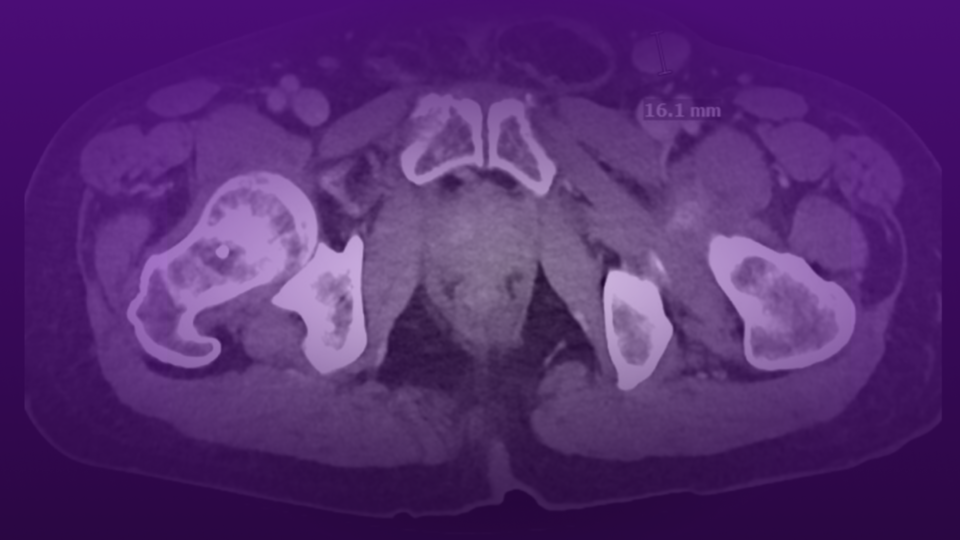
Immune check point inhibitors (ICIs), including anti-PD-1 and PD-L1 antibodies, have been found to have extended survival benefits for patients with various solid tumors. ICIs target immune checkpoints such as cytotoxic T-lymphocyte-associated protein 4 (CTLA-4) and programmed cell death protein 1 (PD-1) to potentiate immune responses to cancer cells.
Cemiplimab is one of many anti-PD-1 antibodies, which has recently served as an investigational drug in the neoadjuvant setting for early-stage, high-risk HER2-negative breast cancer. ICIs can trigger a wide range of immune-related adverse events (AEs), with some of the most common including pneumonitis, colitis, and nephritis. ICI-related cystitis is a less-frequently recognized immune-related AE and is a non-bacterial cystitis that has been reported in several small-cohort studies. It can often be mistaken for bacterial cystitis, radiation cystitis, tumors, or stone disease. Therefore, ICI-related cystitis can pose a diagnostic dilemma for urologists in the office-based setting.
Here, we present a case of a patient with presumed ICI-related cystitis.
Case Highlights:
- A woman in her early 70s developed sudden-onset urinary urgency 3 months after starting chemo-immunotherapy for breast cancer.
- The timing of symptom onset, proteinuria, and negative urine cultures, were consistent with ICI-related cystitis.
- Although rare, ICI-related cystitis should be considered in patients on PD-1/PD-L1 blockade who develop new urinary symptoms with repeatedly negative cultures.
- Diagnosis is one of exclusion, with imaging and cystoscopy aiding evaluation.
- Multidisciplinary discussion can guide decisions about ICI interruption and corticosteroid treatment while balancing oncologic control.
Case Presentation
This is a woman in her early 70s with no significant past medical history who was recently diagnosed with T2N1 ER-low, HER2-low breast cancer currently undergoing treatment with paclitaxel/cemiplimab as part of a clinical trial. She presented to the urology clinic with 1 week of sudden onset urgency and urge incontinence 3 months after initiation of her cancer treatment. She reported that these symptoms were not associated with dysuria, hematuria, fevers, flank pain, stress incontinence, or suprapubic pain, and she had no prior diagnosis of recurrent UTIs or overactive bladder. Her oncologist obtained two separate voided urinalyses, which only demonstrated the presence of trace leukocyte esterase, positive nitrites, and urine protein 100 mg/dL, with no microhematuria and no growth on urine cultures.
The patient was given a trial of NSAIDs and pyridium with persistence of symptoms after 2 weeks of surveillance.
GU Exam. External genitalia: Vaginal introitus with mild atrophy, no lesions discharge or erythema. Urethra without hypermobility and negative cough stress test. Catheterized urine sample with clear urine.
Imaging. The patient underwent renal bladder ultrasound, which was unremarkable.
The patient was prescribed steroids for suspected ICI-related cystitis. Response is yet to be determined as treatment was ongoing as of November 2026.
Discussion: Diagnosis and Management of ICI-related Cystitis
Presentation. Patients typically present with frequency, urgency, dysuria, nocturia, and occasionally hematuria. Workup begins with urinalysis and culture, with findings most commonly of sterile pyuria, proteinuria, and occasionally hematuria, as well as repeatedly negative urine cultures. In some cases, elevated creatinine has been noted if there is suspected ureteral involvement and obstruction in patients presenting with flank pain or renal colic. In small cohort studies, the onset of symptoms is reported to begin at a median of 5 months after initiation of PD-1/PD-L1 antibody treatment, with a range of 2 to 36 months.
ICI-related cystitis is presumed to be a diagnosis of exclusion with no gold-standard test. The differential may include bacterial cystitis or prostatitis, radiation cystitis, bladder tumor or invasion, chemotherapy-related hemorrhagic cystitis, urolithiasis, urinary TB, or interstitial cystitis/BPS. In many cases, useful discriminators include timing of symptom onset, epidemiologic risk factors, and imaging.
Imaging and Pathology. Imaging with either contrast-enhanced pelvic CT, CT urography, or renal bladder ultrasound can be obtained, particularly in cases of reported gross hematuria, flank pain, or persistence of symptoms. Findings on CT can include inflammatory bladder wall thickening1 and exclusion of tumors or stones. ICI-related ureteritis can present with ureteral inflammatory changes with or without hydroureteronephrosis.
Cystoscopy can be a useful adjunctive test to rule out tumors. Typical findings include erythematous and edematous mucosa with hyperemia1. Biopsy, when obtained, may confirm the presence of lymphocytic infiltration, plasma cells, eosinophils, urothelial desquamation and lymphoid follicle formation1. However, histopathology reports are limited and therefore based on only a small number of patient cases in the literature. Urine cytology can also be utilized in the office setting with typical findings of numerous neutrophils and absence of malignant cells.
Treatment and Management. Management of ICI-related cystitis is individualized to each patient depending on the severity of symptoms and optimizing oncologic control. Considerations for treatment include the persistence or worsening of symptoms, hematuria, need for catheterization, hospitalizations, or other life-threatening complications. A multidisciplinary discussion is important to determine if ICI interruption or a course of steroids is warranted. The most commonly reported regimen is IV methylprednisolone 120 mg/day, which is then tapered to 80 mg/day and then transitioned to oral dexamethasone. However, this practice was reported in specific cohorts and does not reflect a universally validated dosing regimen. Post-treatment CT scan, if obtained, may demonstrate improvement or resolution of inflammatory changes in the bladder1. However, recurrence has also been reported during steroid taper and after ICI rechallenge. The decision to rechallenge should weigh the benefits of tumor control with the risk of recurrent urinary ICI-related cystitis symptoms and complications.
Conclusions. ICI-related cystitis is a rare adverse event but important for urologists to consider in the differential diagnosis for patients on PD-1/PD-L1 blockade who develop new urinary frequency, urgency, dysuria, or hematuria with sterile pyuria, particularly when repeat cultures are negative. Evaluation can include a combination of imaging and cystoscopy, with small case series supporting the use of steroids as the primary treatment strategy.