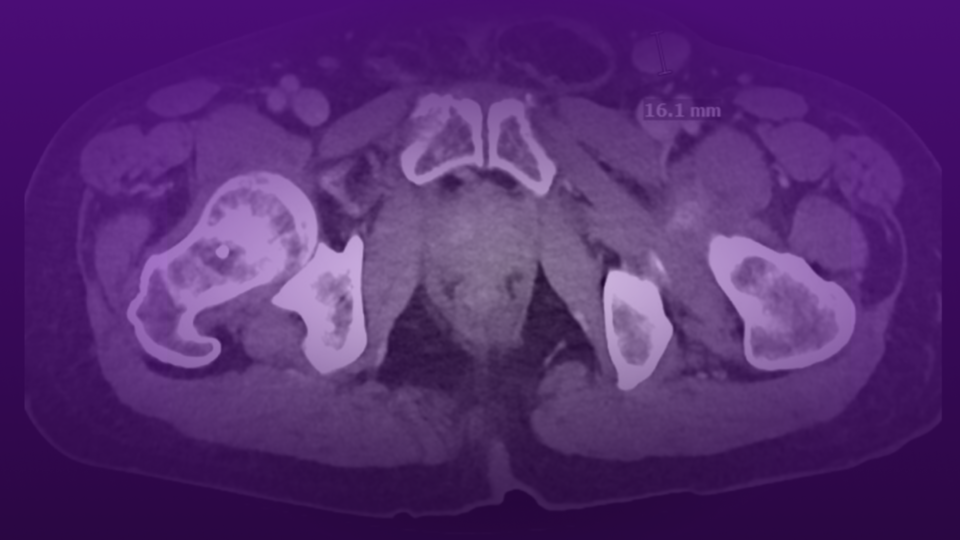
Management of overactive bladder has evolved significantly in recent years. In the modern landscape, greater emphasis is placed on individualized and patient-centered approaches to treatment, including the role of implantable tibial nerve stimulation (ITNS). This technique has been shown to reduce the logistical burden of repeated office-based sessions with percutaneous tibial nerve stimulation (PTNS). New technologies and emerging devices offer a compelling alternative to traditional approaches due to the absence of a testing phase, low morbidity, and minimal ongoing maintenance requirements.
At NYU Langone Health, we embody a treatment philosophy where therapy is guided not only by symptoms, but also by prior response, treatment burden, patient preference, and quality-of-life goals. Illustrating this approach, this Case of the Month highlights a patient in her late-70s with persistent urgency urinary incontinence who was implanted with Altaviva™ (Medtronic), a novel tibial nerve stimulation device with a favorable benefit-risk profile for patients who want to avoid the side effects of anticholinergic therapy.
Case Highlights:
- A woman in her late-70s presented with persistent urgency urinary incontinence seeking a long-term, practical, non-anticholinergic treatment option.
- Given the favorable benefit-risk profile, she was implanted with Altaviva™ (Medtronic), a novel ITNS device.
- The procedure was performed successfully in the outpatient setting, requiring only local lidocaine anesthesia.
- At follow-up, she reported improvement in urgency, decreased urgency urinary incontinence episodes, and greater confidence leaving home for extended periods.
Case Presentation
A woman in her late 70s presented with bothersome urinary urgency, daytime frequency, nocturia, and urgency urinary incontinence. She reported daily leakage associated with a sudden, difficult-to-defer urge to void. Although otherwise active and independent, her symptoms had become increasingly disruptive. She planned errands and social activities around restroom access, wore pads daily, and found the unpredictability of urgency urinary incontinence particularly distressing.
She had previously pursued behavioral modification and fluid management strategies and had trialed a beta-3 agonist with partial improvement, but remained significantly bothered by urgency and leakage. Anticholinergic therapy was discussed but was not favored given her age and concern regarding potential cognitive adverse effects. She had also previously undergone percutaneous tibial nerve stimulation (PTNS) and experienced partial benefit, but found the repeated office visits burdensome and increasingly difficult to sustain.
She presented to NYU Langone to discuss additional options for more durable symptom control of her overactive bladder.
Physical Examination and Evaluation
The patient was well-appearing and in no acute distress. Abdominal examination was benign. Focused pelvic examination demonstrated no significant pelvic organ prolapse and no stress urinary incontinence on examination. Urinalysis was negative. Post-void residual volume was low, consistent with adequate bladder emptying.
Taken together, her presentation was most consistent with overactive bladder with urgency urinary incontinence, refractory to conservative therapy, only partially responsive to pharmacologic management, and not satisfied with frequent office visits required for percutaneous tibial nerve stimulation.
Management
The patient’s treatment goals were reviewed in detail. She was most interested in reducing urgency incontinence episodes, improving confidence with daily activities, and avoiding therapies that would either increase treatment burden or expose her to medications with undesirable side effects.
Treatment options were reviewed, including medication optimization, intradetrusor onabotulinumtoxin A, sacral neuromodulation, continued PTNS, and ITNS. Selection among advanced therapies is multifactorial and should be guided by shared decision-making, patient preference, prior treatment response, and the practical burden of care.1
For this patient, the combination of only partial response to a beta-3 agonist and reluctance to use anticholinergics left her with the choice of one of the many minimally invasive therapies offered at NYU Langone Health. She was concerned about the need for anesthesia for sacral neuromodulation and voiced some concerns about onabotuliumtoxin A. She had some benefit from PTNS, but the poor long-term practicality made ITNS with Altaviva™ (Medtronic) particularly appealing. She elected to proceed with implantation after discussion of the risks, benefits, alternatives, and expected postprocedural limitations.
The procedure was performed successfully in our outpatient surgery center, using only local lidocaine anesthesia, and did not require any further sedation.
Palpation and surface landmarks were used to guide localization of the target region (Figure 1). The implant was done via a 2-cm incision on the medial aspect of the ankle, and a dissection was performed with a provided pocket dissector. The Altaviva™ implant was placed into the pocket, placing it above the fascia. The brief procedure concluded with a two-layer skin closure and placement of a temporary compressive wrap.
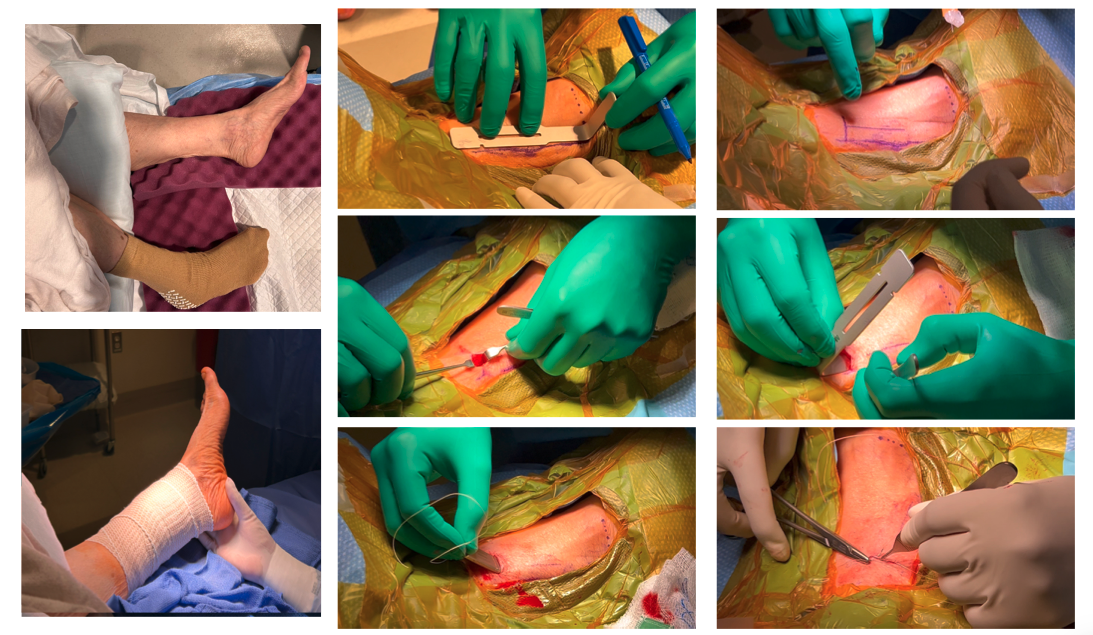
The procedure was done without complication, and she was sent home with the device already activated. At follow-up, she reported improvement in urgency, decreased urgency urinary incontinence episodes, and greater confidence leaving home for extended periods.
Discussion
Overactive bladder is a common and burdensome condition that can substantially impair quality of life. Prior work from our institution and other investigators have framed lower urinary tract symptoms as prevalent, often underreported, and highly disruptive to daily function, exercise, travel, and emotional well-being.1,2 Earlier treatment paradigms were often presented as rigid step therapy, but current practice increasingly emphasizes a more individualized and patient-centered approach. This philosophy is consistent with the treatment-selection style reflected at the NYU Langone Division of Urogynecology and Reconstructive Pelvic Surgery, where therapy choice is guided not only by symptoms, but also by prior response, treatment burden, patient preference, and quality-of-life goals.
This case illustrates that shift well. The patient had persistent urgency urinary incontinence despite behavioral therapy and partial benefit from a beta-3 agonist. Anticholinergics were less attractive because of concern regarding adverse cognitive effects in an older adult. She had already demonstrated that tibial nerve stimulation could be beneficial through prior PTNS, but the office burden of maintenance therapy had become impractical.
Neuromodulation has an established role in overactive bladder treatment, and ITNS represents a newer therapeutic category that seeks to preserve the therapeutic rationale with a known anatomic target (tibial nerve) that is easily accessible, safe, and reproducible. The technique of ITNS reduces the logistical burden of repeated office-based sessions with PTNS.3 For patients who have already demonstrated benefit from tibial nerve stimulation, logically an implantable platform may provide a more durable and practical option. However, ITNS should not be limited to those who have undergone PTNS, but rather should be introduced and offered to patients with overactive bladder who are unwilling or unable to undergo other treatments, or those having intolerable side effects or inadequate symptom control.1 For those who would consider an implant, ITNS may be an attractive option because it requires no testing phase, and has little morbidity, and minimal chronic patient maintenance.
Within the emerging category of ITNS, Altaviva™ is notable because of the internally powered rechargeable battery (usually requiring only a 30-minute recharge once or twice a year with an expected 15-year duration), superficial placement, and improved ease of use with automated programmed stimulation. The pivotal clinical trial for this system, the TITAN 2 study, investigated 126 patients in a single arm design resulting in over 60 percent of patients achieving more than a 50 percent reduction at 12 months.4 At 12 months, 80 percent of patients reported their condition had improved compared to before their implant. More broadly, the significance of ITNS lies in its potential to produce clinically meaningful improvement in urgency urinary incontinence and patient-reported quality of life while reducing treatment burden.
Patient preference is especially relevant in this treatment landscape when considering different options. In a 2024 study by Kapur et al., the introduction of ITNS as an option shifted patient interest away from both PTNS and sacral neuromodulation and also reduced the proportion of patients who selected no therapy.3 This latter finding suggests ITNS may help bring more patients into the treatment pipeline that previously were not willing to undergo treatment, presumably because they did not like the prior options presented to them.5
Other ITNS platforms, including Revi and eCoin, reflect the same broader movement toward less burdensome neuromodulation strategies for urgency urinary incontinence (Table 1). Collectively, these platforms underscore that ITNS is becoming a meaningful category within contemporary overactive bladder management.
| ITNS system | Manufacturer | Implant location | How stimulation is delivered | Battery / power | Battery or implant lifespan | Typical stimulation schedule | Patient involvement |
|---|---|---|---|---|---|---|---|
| eCoin | Boston Scientific / Valencia technology | Above fascia (subcutaneous) | Direct stimulation from coin-shaped implant over tibial nerve; automatic | Internal, non-rechargeable battery | ~3–6 years; device replaced when battery depleted | ~30 min every 3 days, programmed automatically | Very low — no wearable needed |
| Revi | BlueWind Medical | Below fascia (subfascial) | Implant is energized wirelessly by an external ankle-worn unit | No implanted battery; external unit is rechargeable | Implant specified for 10 years | Usually ~30 min/session; patient wears external unit, commonly 1–2×/day depending on programming | Higher — must put on/charge wearable and initiate therapy |
| Altaviva | Medtronic | Above fascia (subcutaneous) | Direct stimulation from implanted neurostimulator; automatic | Internal rechargeable Li-ion battery | Expected 15 years | Automatic, programmable; commonly described as ~30 min 3×/week | Low — therapy automatic; implant generally recharged only 1–2×/year |
At the same time, we’re seeing growth in transcutaneous tibial nerve stimulation (TTNS) for use at home. It remains unclear how at-home devices will be adopted and which patient populations will show benefit. To date, comparative data are lacking and treated populations in the literature for ITNS and TTNS are heterogeneous, making comparisons across studies limited. However, there is concern that by avoiding any office- or hospital-based procedural intervention, TTNS may come at the expense of decreased efficacy and/or durability. We need to systematically gather more data to better understand the evolving landscape of neuromodulation and the unique roles and benefits of sacral nerve stimulation, PTNS, ITNS, and TTNS. Over the long term, it is likely that all of these therapies will play a role in the treatment of overactive bladder. Clinicians and patients will need to tailor treatments based on a variety of factors and preferences.
For the practicing urologist or urogynecologist, the most important issue remains patient selection. In our early experience, ITNS may be especially well suited to patients with:
- Bothersome urgency urinary incontinence or refractory overactive bladder symptoms
- Inadequate relief from or poor tolerance of oral medications
- Desire to avoid anticholinergic exposure
- Prior benefit from PTNS but inability to sustain office-based maintenance
- Interest in a less invasive neuromodulation option
- Adequate bladder emptying and no major untreated competing pathology
As with other emerging technologies, successful implementation requires more than procedural familiarity alone. Our group emphasizes that strong outcomes depend not just on the intervention itself, but on careful evaluation, patient selection, expectation-setting, and thoughtful integration into a broader treatment pathway. Our early experience suggests the same is true for the ITNS program now established at NYU Langone.
More broadly, the emergence of ITNS as a category reflects a meaningful evolution in overactive bladder care—a movement toward therapies that can be individualized not only to symptom severity, but also to lifestyle, treatment burden, and patient preference. For older patients seeking to avoid anticholinergic exposure, and for patients who have benefited from PTNS but cannot sustain repeated office visits, this may be a particularly compelling option.
References
1. Cameron AP, et al. J Urol. 2024;212(1):11-20. DOI.
2. LaPier Z, et al. Urogynecology (Phila). 2024;30(3):352-362. DOI.
3. Kapur A, et al. Neurourol Urodyn. 2024;43(4):959-966. DOI.
4. Lee U, et al. J Urol. 2026;215(6):702-712. DOI.
5. Jericevic D, et al. Urol Pract. 2024;11(2):394-401. DOI.