
Referral Notes:
- NYU Langone surgeons remotely guided a team in India through one of the world’s first pediatric robotic slide tracheoplasties under ECMO for benign tracheal disease.
- Months of virtual planning, ECMO training, and rehearsals on 3D-printed models helped the team reconstruct a severely narrowed 4.5-cm tracheal segment using a robotic approach.
- The case underscores the potential of live telementoring to expand access to highly specialized surgical care.
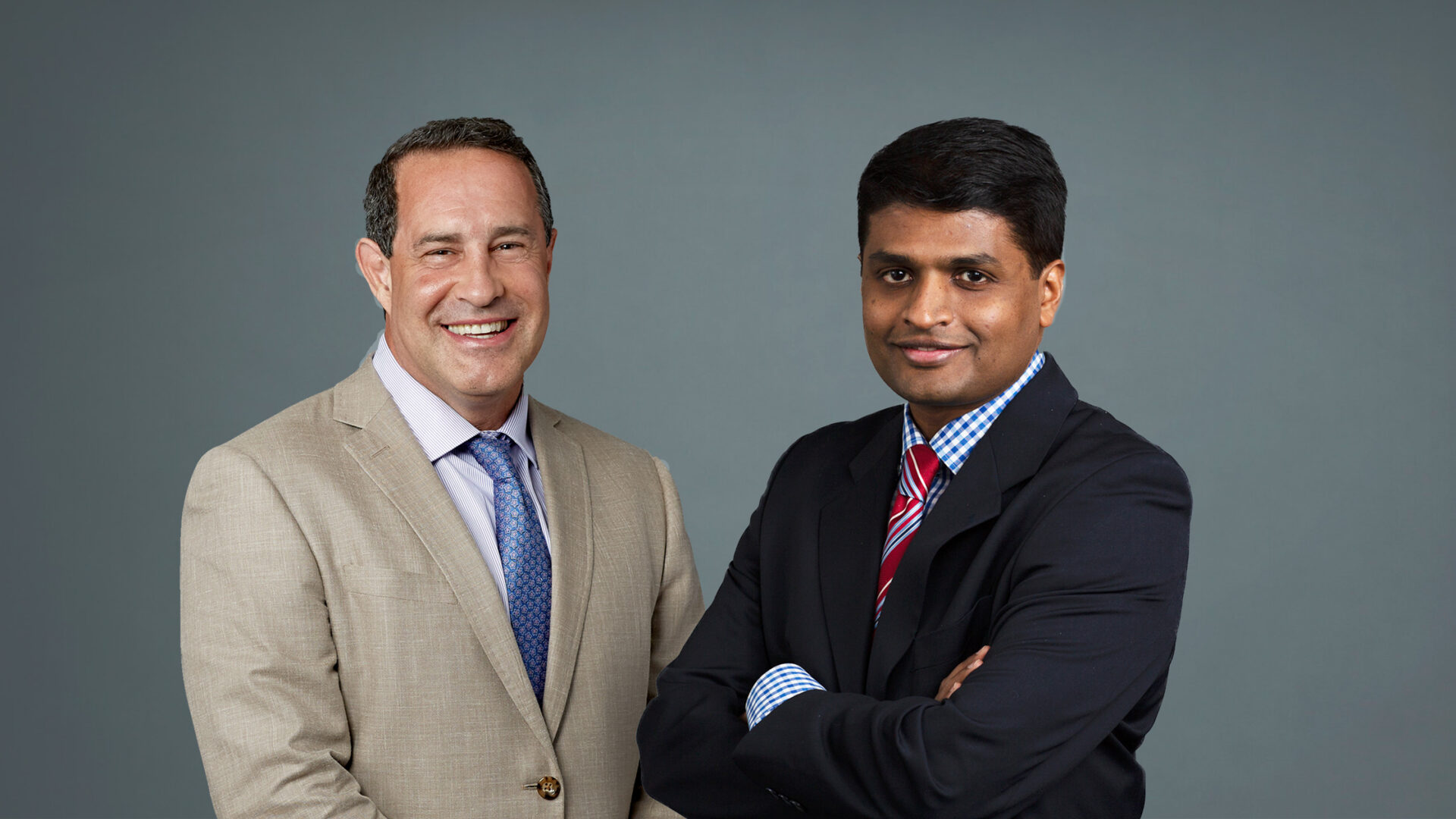
In the fall of 2025, world-renowned thoracic surgeon, Robert J. Cerfolio, MD, MBA, and cardiothoracic surgeon T.K. Susheel Kumar, MD, remotely guided a multidisciplinary surgical team at Christian Medical College (CMC) Vellore in India in successfully performing one of the world’s first pediatric robotic slide tracheoplasties under ECMO for benign tracheal disease.
The patient, less than 10 years old with congenital tracheal stenosis, had a history of respiratory distress since birth. “He could barely run,” Dr. Cerfolio says. “He was literally at risk of eventual suffocation as his stenosis progressed.”
With international travel for specialty care not feasible for the family, the CMC Vellore team sought guidance from Dr. Cerfolio and Dr. Kumar. Rather than perform a traditional open slide tracheoplasty, which requires a thoracotomy, the team hoped to offer a less invasive robotic approach.
“Our collaboration was truly unique and it was an honor to work with the physicians at Christian Medical College Vellore.”
Robert J. Cerfolio, MD, MBA
“Our collaboration was truly unique and it was an honor to work with the physicians at Christian Medical College Vellore,” Dr. Cerfolio says. “They did a fantastic job.”
Dr. Cerfolio has completed more than 19,400 thoracic surgeries, including over 3,100 robotic thoracic operations, and has performed all four pediatric robotic slide tracheoplasties for cancer reported worldwide. This procedure represents his fifth case overall, his first virtual robotic slide tracheoplasty, and his first application of the technique for benign disease.
Meticulous Planning and Practice
In a series of preoperative video conferences over several months, Dr. Cerfolio remotely guided the CMC Vellore surgical team as they practiced slide tracheoplasty using 3D-printed resin models of the patient’s chest, ribcage, and trachea. The replicas, created from the patient’s CT scans, allowed the surgeons to rehearse complex robotic manipulations and optimize surgical planning. “Optimal processes and data-driven, specific, targeted practice is the key to great outcomes in all parts of life, including the operating room,” Dr. Cerfolio says.
The operation also marked the CMC Vellore pediatric surgical team’s first experience with ECMO. “The pediatric application of ECMO isn’t widely used in India, but our team here at Hassenfeld Children’s Hospital is experienced in providing ECMO support for even one-day-old babies, if required,” Dr. Kumar says.
To prepare the surgical team, Dr. Kumar provided virtual training on pediatric veno-venous ECMO procedures, including the delicate balance of anticoagulation and the safe withdrawal of the ECMO machine at the conclusion of the case.
Collaborative Surgical Approach
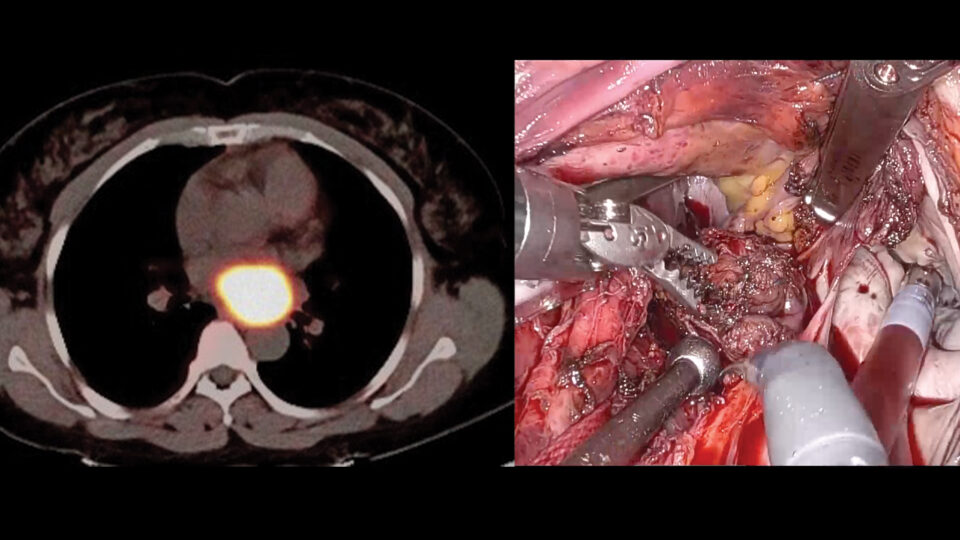
The operation mirrored the team’s rigorous rehearsals. Using the da Vinci Xi robotic systems and secure Intuitive Telepresence platform, the surgeons reconstructed a 4.5-cm segment of severely narrowed trachea. The procedure involved dividing the narrowed trachea, then opening the lower segment anteriorly and the upper segment posteriorly. The two segments were then advanced onto one another and re-anastomosed, which shortened the airway but increased its luminal size fourfold.
“Live telementored surgeries like this will be the future of medicine.”
T.K. Susheel Kumar, MD
“From my monitor in New York, I pointed and placed arrows directly in the view of the surgical field so the team in India knew exactly where to cut and which sutures to place,” Dr. Cerfolio says. Meanwhile, Dr. Kumar remained available to remotely provide ECMO guidance as needed. “The ECMO team did a phenomenal job,” he says.
Postoperative Management
Following surgery, the patient was ventilated for two days, weaned from oxygen support, and discharged on day six—significantly earlier than the recovery timeline associated with an open slide tracheoplasty. “Months after surgery, the patient’s bronchoscopy still looks spectacular and he’s doing great,” Dr. Cerfolio says. “That’s what it’s all about, and now the patient is able to play Crickett with his friends in the streets and playgrounds of India.”
“With telemedicine, the world is becoming a much smaller place,” Dr. Kumar adds. “It’s allowing us to share our expertise more easily, which is good for patients. Live telementored surgeries like this will be the future of medicine.”