
In March 2025, a man in his 30s presented to NYU Langone Health’s multidisciplinary Center for Amputation Reconstruction after sustaining a partial right ring finger amputation at the PIP joint and right thumb amputation at the MP joint due to a work-related table saw injury.
Before presenting to the center, the patient underwent a web space deepening, but the procedure did not achieve the expected results, leaving him with motion difficulties in some of the remaining digits. Due to the short residual digit, a traditional prosthesis with a large glove-based socket would limit functionality.
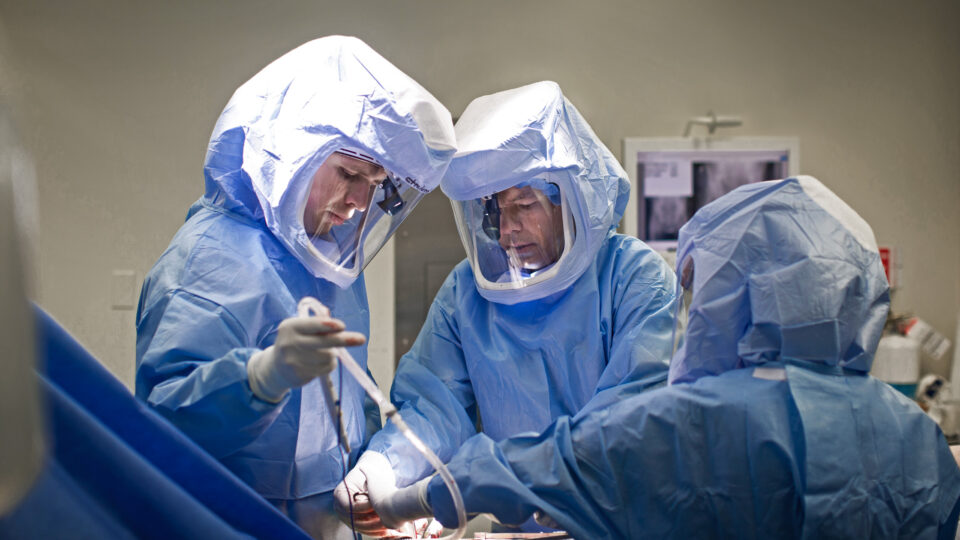
Orthopedic surgeon and center co-director Omri Ayalon, MD, along with co-director Jacques Hacquebord, MD, performed a novel digit osseointegration surgical procedure, implanting a permanent titanium implant into the patient’s metacarpal to serve as an anchor for a directly connected prosthesis. The case was among the first six performed nationwide and the first at NYU Langone.
A New Option for Thumb Reconstruction
When evaluating options for thumb reconstruction, osseointegration was chosen over traditional toe-to-thumb transfer and other reconstructive procedures because of the need to prioritize thumb motion and function—a key component of overall hand function. Among the other benefits of osseointegration are reduced morbidity and donor site complications.
“We want to shift the paradigm of thumb amputation surgery with this unique and comprehensive solution.”
Omri B. Ayalon, MD
Compared to traditional glove and socket prostheses, osseoanchored alternatives allow for increased range of motion, better functionality, osseoperception, and reduced morbidity. In addition, the permanent implant reduces skin irritation, lowering the likelihood of infection.
“Traditional prosthetic options were suitable for this patient, but using a glove and socket prosthesis would have resulted in the loss of the thumb’s mobility, which accounts for up to 50 percent of the hand’s overall function,” Dr. Ayalon says.
During the surgery, Dr. Ayalon performed targeted muscle reinnervation and implanted the titanium osseoanchored prosthetic connector. The complex soft tissue surgery closed the gap between bone and metal, allowing the thumb to heal while preserving digit flexion. Gaps between implant and skin were also avoided to prevent infection or loosening.
Directly affixed to the patient’s bone, one key benefit of the prosthesis is the development of osseoperception, where sensory input is transmitted from the prosthesis, through the bone, and is able to be perceived by the patient—an outcome not possible with traditional prostheses.
A Remarkable Recovery
Four weeks after the procedure, the patient was able to carry out most of their daily tasks independently, including those that require fine motor dexterity. Occupational therapy helped him gain implant strength and confidence and he began to improve rapidly.
By May 2025, the patient had achieved independence in most of his daily activities, including tasks that require delicate handwork like penmanship, tying shoelaces, and fastening buttons.
Following the successful outcome, Dr. Ayalon and his team developed a specific rehabilitation protocol designed to improve implant strength post-surgery. He explains that this type of procedure should not be performed in isolation, but rather with a specialized multidisciplinary team to manage the recovery process.
“This procedure is revolutionary for patients with thumb amputation,” Dr. Ayalon says. “It’s extremely safe and effective, preventing the morbidity associated with conventional surgical options.”
Looking ahead, Dr. Ayalon plans to standardize the technique, then begin to teach others. “We want to shift the paradigm of thumb amputation surgery with this unique and comprehensive solution,” he adds.
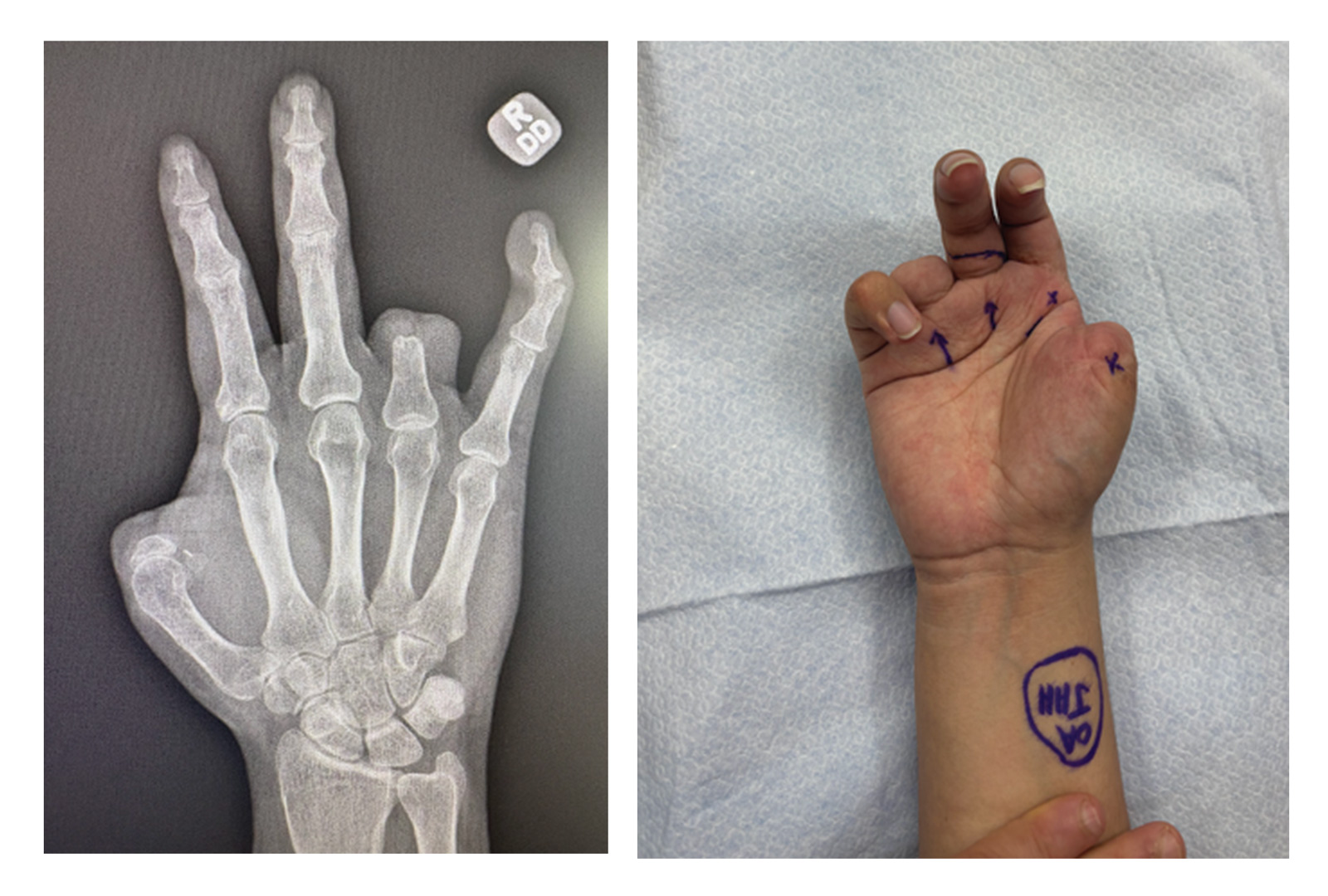
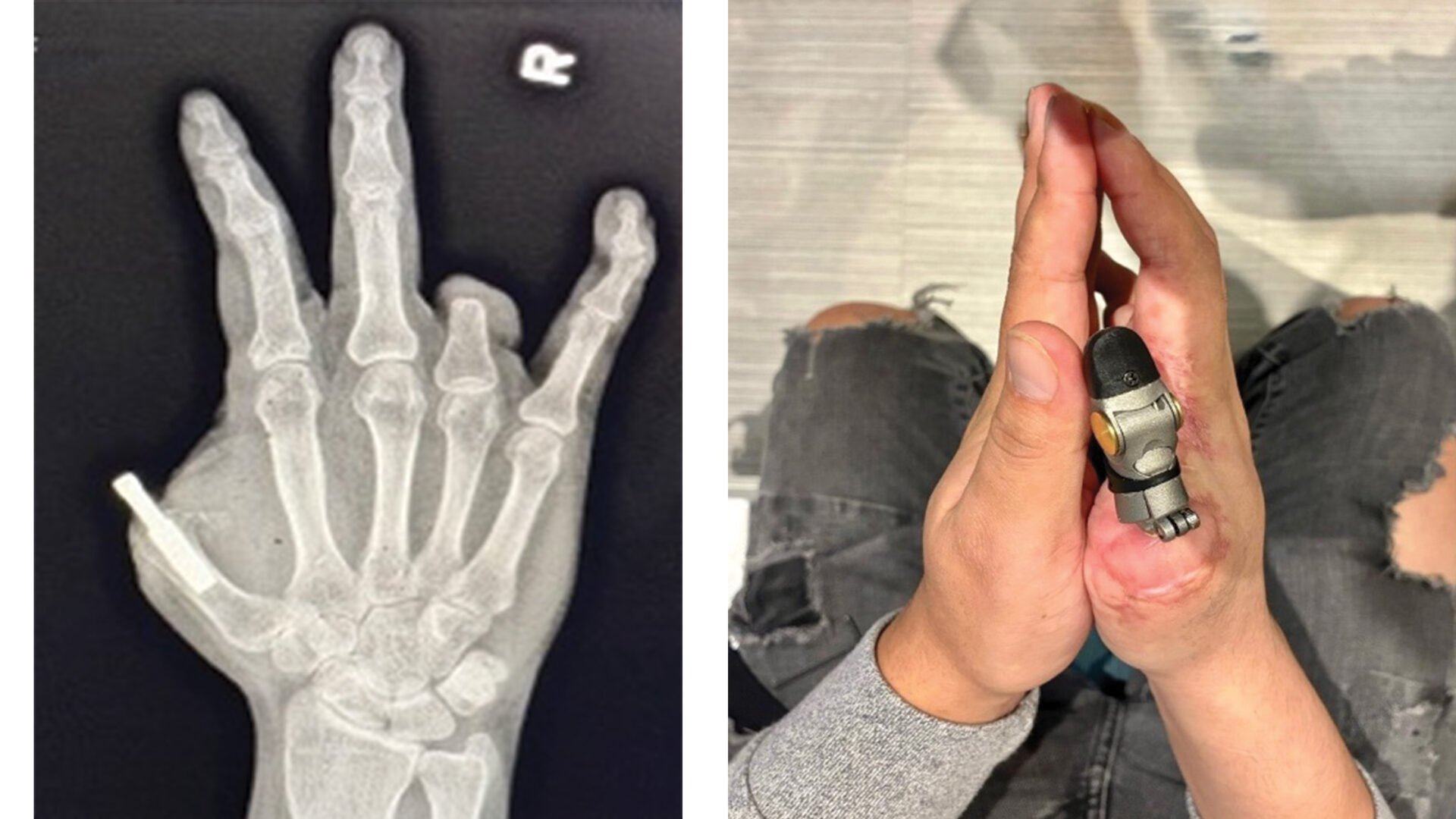
(L) Preoperative X-ray of the patient’s right hand; (R) Photograph of the same hand. Source: NYU Langone Health.
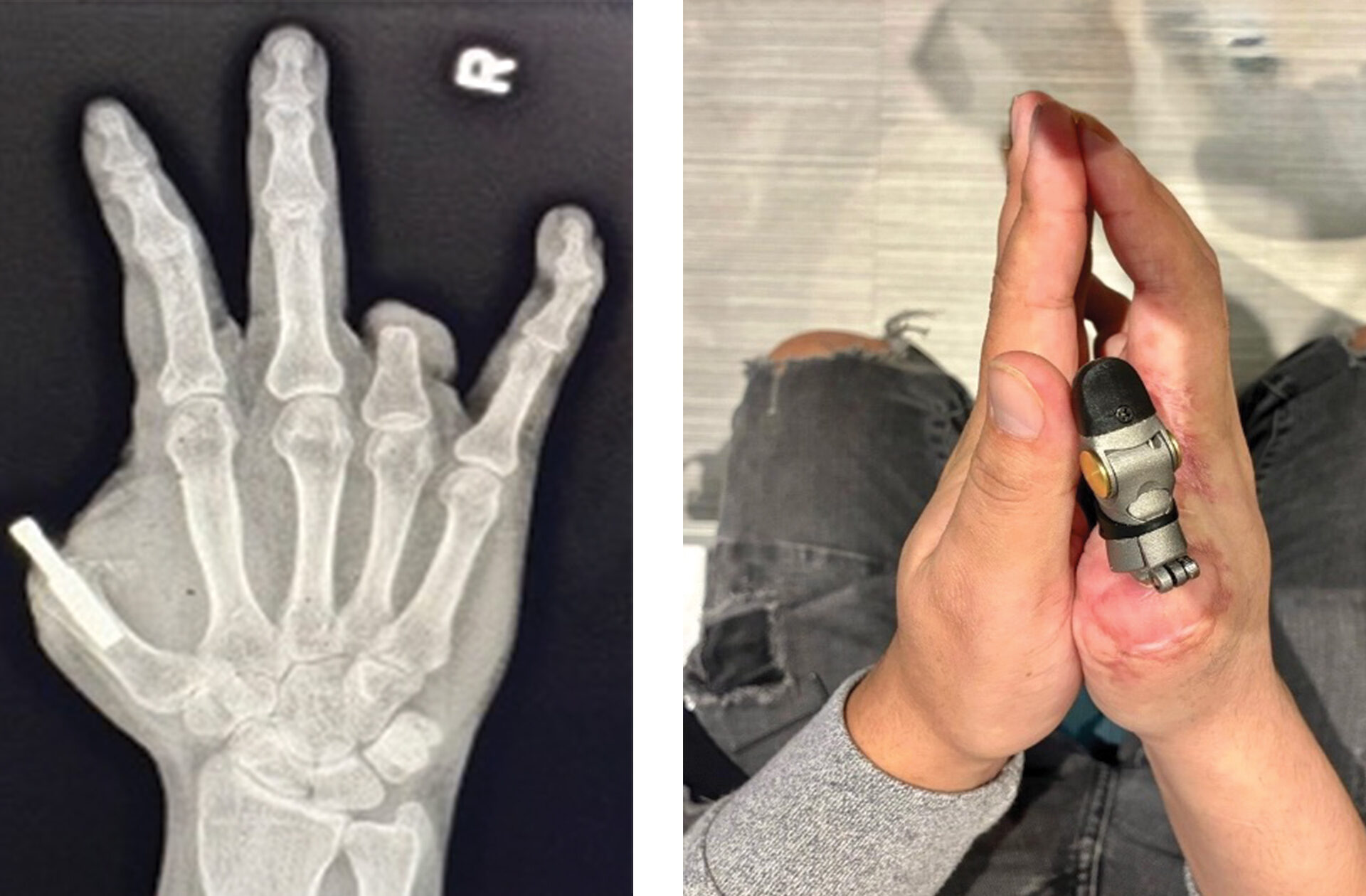
(L) Postoperative X-ray of the patient’s right hand showing ring finger amputation at proximal phalanx and thumb amputation at MP joint after a work-related injury; (R) The patient’s osseoanchored prosthesis after the surgery. Source: NYU Langone Health.
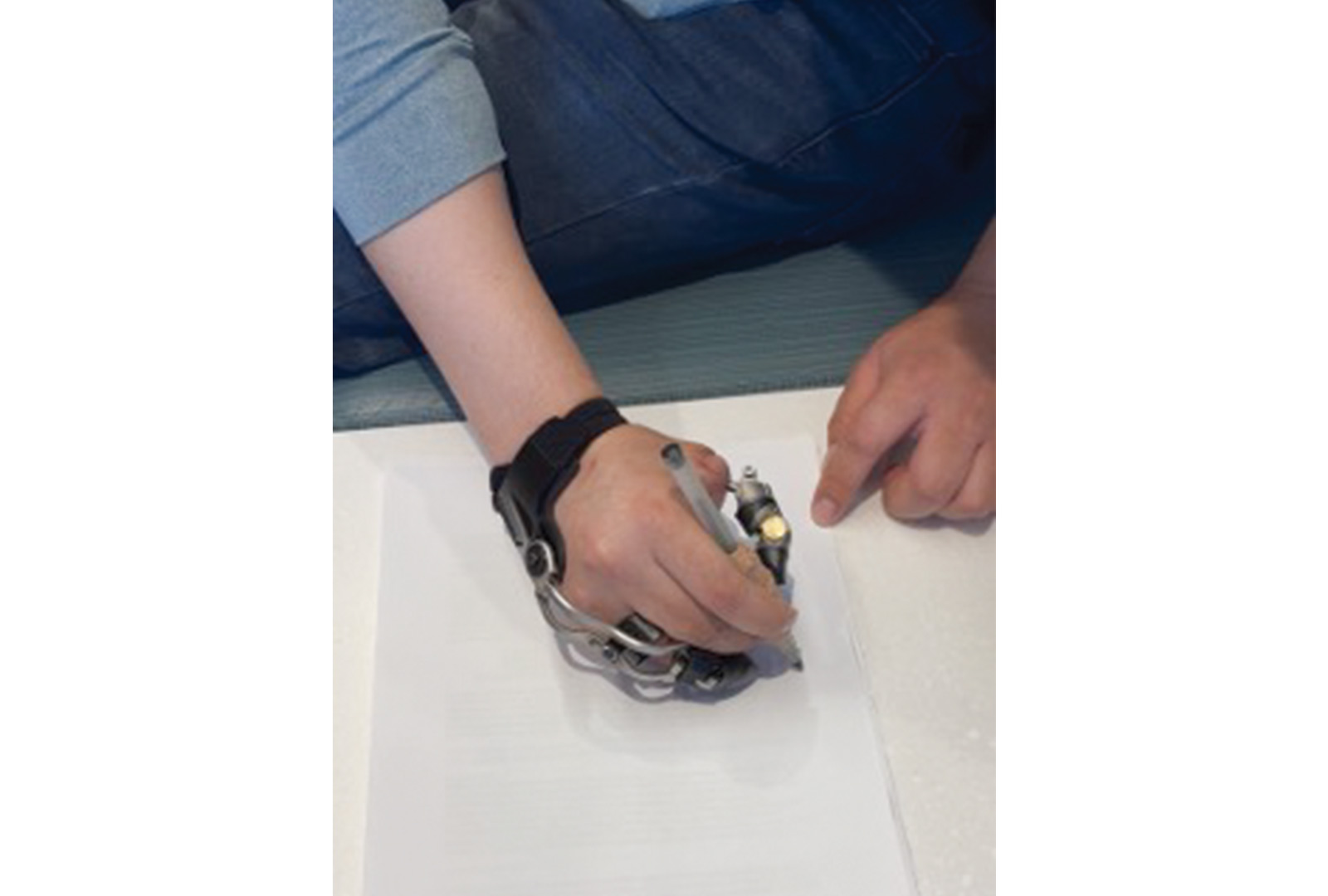
During a rehabilitation session, the patient practices a fine motor task—writing with a pen. Source: NYU Langone Health.