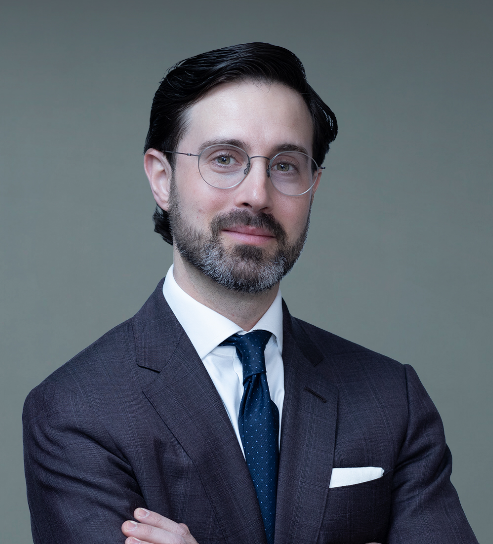



Noah A. Cohen, MD, has joined NYU Langone as section chief of complex GI surgical oncology in the Division of Hepatobiliary and Pancreatic Surgery.
A fellowship-trained surgical oncologist, Dr. Cohen brings expertise in gastric cancer, gastrointestinal stromal tumors (GISTs), retroperitoneal sarcoma, and peritoneal surface malignancies—rare, technically demanding, and often undertreated cancers. He’s also an active clinical trial investigator and researcher. His work includes developing tools to inform prehabilitation and studying postoperative regret, both important in complex GI surgery, which can carry substantial morbidity.
Here, he discusses regional gastric cancer screening, refining surveillance and treatment de-escalation for GISTs and retroperitoneal sarcomas, addressing under-referral in peritoneal surface malignancies, and the expanding role of immunotherapy in nonoperative management.
Physician Focus: Gastric cancer is relatively uncommon in the U.S., but risk is much higher in certain immigrant populations. How does that play out clinically in a city as diverse as New York?
Dr. Cohen: That’s exactly the challenge. The U.S. has a low rate of gastric cancer, so there is no routine national screening guideline. But the national incidence rate can be misleading in a place like New York City.
We have large immigrant communities from East Asia, Eastern Europe, and Central and South America—places where gastric cancer incidence is substantially higher. People who immigrate here don’t leave their biology behind, so a substantial proportion of our population has elevated risk, yet we don’t have a systematic way to identify and screen them.
“One of my priorities at NYU Langone is to build a gastric cancer screening program, with direct outreach to high-risk patients and their physicians.”
Noah A. Cohen, MD
As a result, I routinely see symptomatic adults from higher-risk populations who come in with advanced gastric cancer, which carries a poor prognosis. Contrast that with Japan, where a national screening program for gastric cancer identifies most patients at stage one, when treatment is curative nearly 90 percent of the time. One of my priorities at NYU Langone is to build a gastric cancer screening program in collaboration with GI colleagues, with direct outreach to high-risk patients and their physicians to catch more cancers early.
Physician Focus: Where do you see the greatest opportunities to improve care for patients with GISTs and retroperitoneal sarcomas?
Dr. Cohen: GISTs and retroperitoneal sarcomas are technically demanding, requiring resecting colon, kidney, and other organs in the same operation. Good outcomes depend less on technology than on surgical experience—knowing tumor from normal anatomy, achieving complete resection without injuring critical structures, and involving colleagues in vascular surgery, urology, or other specialties when needed. Outcomes are meaningfully better at centers with true subspecialty volume and expertise, but there are very few of them. In addition to specialized surgical care, our Sarcoma Disease Management Group brings together experts in medical and radiation oncology. The combined expertise of these specialists ensures each patient receives a treatment plan tailored to them.
“As a field, we are still defining which subtypes of patients need which combinations of treatment, as well as how best to approach surveillance and de-escalation.”
There are also important opportunities to refine how we tailor treatment before and after surgery. As a field, we are still defining which subtypes of patients need which combinations of surgery, radiation, chemotherapy, and immunotherapy, as well as how best to approach surveillance and de-escalation. These are active areas of investigation by our group.
In GIST, for example, imatinib is effective for high-risk patients, but we need clearer answers on exactly which patients need imatinib and for how long. On the other hand, lower-risk patients are followed with indefinite imaging because we don’t know when it’s safe to stop—a substantial burden of anxiety and healthcare utilization for patients who may be effectively cured.
Physician Focus: For peritoneal surface malignancies, you’ve described an under-referral problem. Can you tell us more about this?
Dr. Cohen: In many community settings, patients with metastatic tumors in the abdominal cavity are often still considered nonsurgical by default and not referred for surgical evaluation. But studies have found that if these patients are referred to a high-volume, complex GI program, there are cytoreductive options available to them, and they can achieve excellent outcomes.
For example, well-selected patients with peritoneal colorectal metastases who undergo complete cytoreductive surgery combined with heated intraperitoneal chemotherapy (HIPEC) can achieve 5-year survival rates of up to 60 percent. That’s a potentially curative operation for a subset of patients who are often told their only option is indefinite chemotherapy, and as a field, we need to raise awareness.
“In many community settings, patients with metastatic tumors in the abdominal cavity are often still considered nonsurgical by default.”
But we also know that for patients with very high-burden disease, a big operation is likely to harm them. So surgical selection is not just about who you take to the operating room—it’s equally about who you don’t. For those patients, we are working to offer surgical alternatives, such as pressurized intraperitoneal aerosolized chemotherapy (PIPAC), and clinical trials with the goal of shrinking tumors enough to convert patients who are not surgical candidates today into patients who can be operated on tomorrow.
Physician Focus: Of your ongoing work with immunotherapies, what are you most excited about?
Dr. Cohen: In gastric cancer, I’m excited about the extraordinary response of microsatellite instability (MSI)-high disease to immunotherapy. We’re seeing complete responses in roughly 60 percent of these patients. That opens an exciting possibility that some patients won’t need surgery. We’re working on building a nonoperative management pathway here at NYU Langone to better define MSI-high gastric cancer patients who achieve complete clinical response to immunotherapy.
I’m also very excited about personalized RNA neoantigen vaccines in pancreatic cancer. I had the opportunity as a fellow to contribute to the protocol design for a study showing these vaccines can generate tumor-specific T cell responses. For a disease that’s long been considered immunologically inert, that’s a compelling proof of concept and points to what’s possible when you put focused scientific attention on cancers that have historically been underfunded and understudied.