


Referral Notes:
- NYU Langone researchers have identified a previously unrecognized population of tolerizing dendritic cells (termed tolDCs) that helps maintain tolerance to microbial and dietary antigens.
- The findings reveal a potential mechanism underlying gut microbiome-driven immune regulation.
- As a future direction, the work may help explain how gut microbes influence responses to cancer immunotherapy and transplantation, and could inform the development of new therapeutic approaches.
The gut microbiome has emerged as an important factor in determining how patients respond to cancer immunotherapy. Research shows that antibiotic exposure can diminish treatment effectiveness, while maintaining a healthy gut flora can enhance antitumor immune responses. Yet a central question remains: How do signals from gut microbes shape the immune system?
A 2025 study published in Nature may provide part of the answer. Researchers from Perlmutter Cancer Center identified a previously unknown population of immune cells in the gut—termed tolerizing dendritic cells, or tolDCs—that helps the body distinguish harmless dietary and microbial antigens from genuine threats. While the work focused on immune tolerance, the findings could help illuminate the cellular pathways through which the microbiome influences responses to cancer treatment.
“Our findings suggest that tolDCs could be harnessed to modulate cancer immunotherapy responses, autoimmune diseases, and transplantation tolerance.”
Rabi Upadhyay, MD
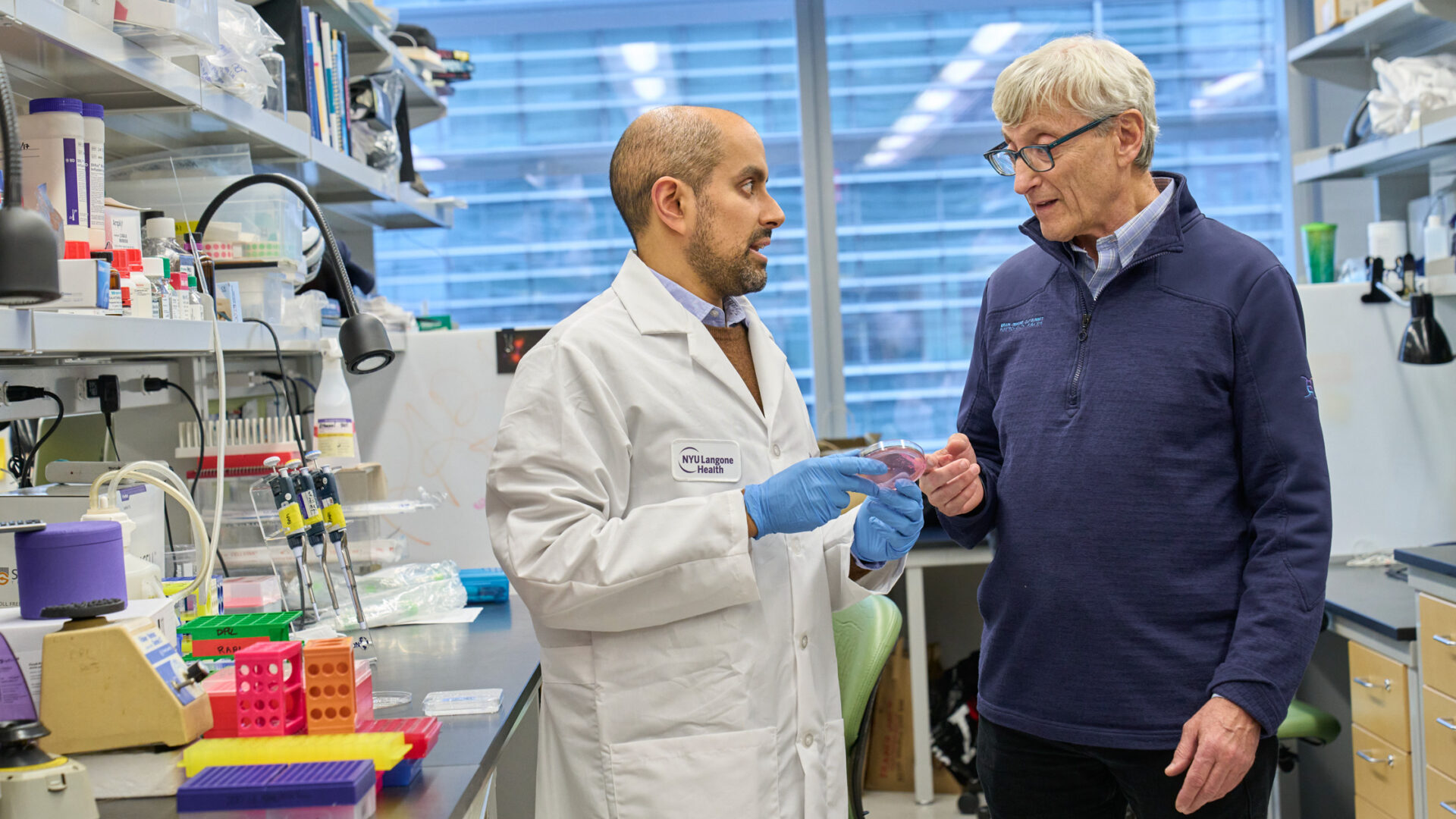
“Our findings suggest that tolDCs could be harnessed to modulate cancer immunotherapy responses, autoimmune diseases, and transplantation tolerance,” says study co-first author Rabi Upadhyay, MD, an assistant professor of medicine at NYU Langone Health.
Howard Hughes Medical Institute investigator Dan R. Littman, MD, PhD, the Helen L. and Martin S. Kimmel Professor of Molecular Immunology in the Department of Pathology, served as senior author.
How the Gut Teaches Immune Tolerance
Using single-cell sequencing and functional studies in mice, the investigators discovered a distinct subset of dendritic cells characterized by expression of the transcription factors PRDM16 and RORγt. These cells act as specialized regulators of immune tolerance, promoting the development of peripheral regulatory T cells (pTregs) that suppress inappropriate immune responses to food and commensal microbes.
The researchers found that these tolerogenic dendritic cells are uniquely equipped to capture antigens in the gut and instruct T cells to adopt a regulatory phenotype. When the cells were absent, mice exhibited impaired immune tolerance and increased susceptibility to allergic inflammation. “When we genetically disrupted the cells, tolerance broke down,” says Dr. Upadhyay.
The team also identified analogous tolDC populations in human mesenteric lymph nodes, intestinal tissue, and tonsils, suggesting that the mechanism is conserved across species.
Future Directions
For oncologists, the discovery offers a new framework for understanding communication between the microbiome and the immune system.
A growing body of evidence links gut microbiome composition to outcomes with immune checkpoint inhibitors. Despite these observations, the mechanisms connecting microbial signals to systemic immunity remain incompletely understood.
By translating microbial and dietary signals into immune-regulatory programs, the newly identified cell population could help explain how the microbiome influences immune function far beyond the gastrointestinal tract. Understanding those pathways may ultimately enable researchers to develop strategies that enhance anti-cancer immunity while limiting harmful inflammation.
Future investigations will examine how gut microbes and the soluble molecules they produce interact with these tolerogenic cells. Dr. Upadhyay and colleagues are also exploring whether similar pathways influence responses to cancer immunotherapy and contribute to immune tolerance in organ transplantation.