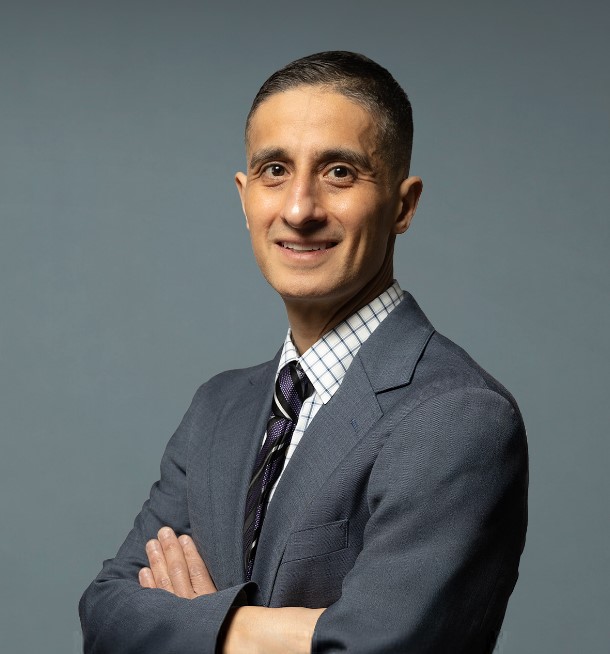


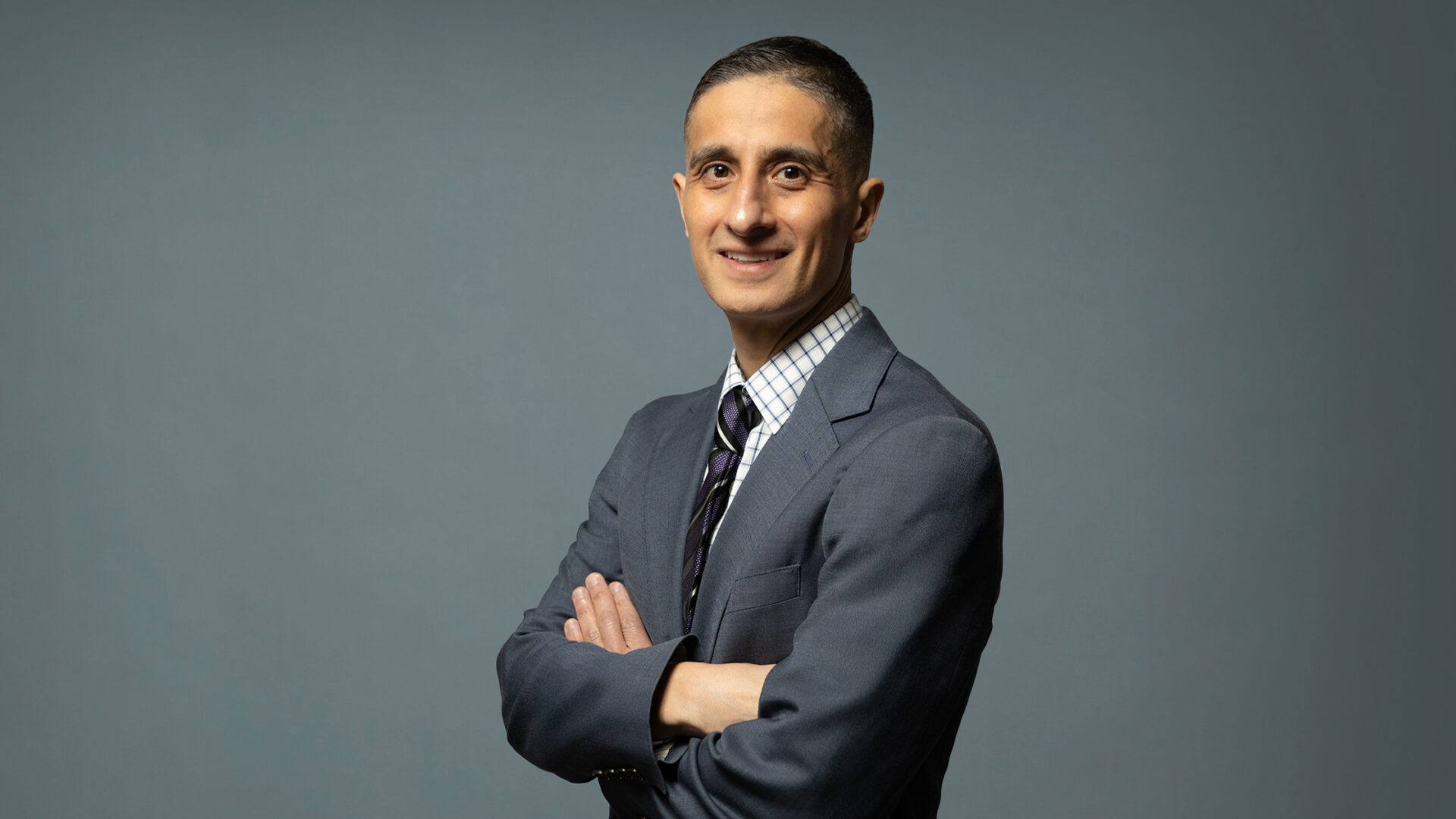
Daniel R. Gomez, MD, MBA, has joined NYU Langone’s Perlmutter Cancer Center as chair of the Department of Radiation Oncology.
A physician-researcher with expertise in lung cancer, oligometastatic disease, and clinical trial leadership, Dr. Gomez is recognized for serving as co-principal investigator of NRG-LU002, the largest randomized trial to date evaluating local ablative therapy in oligometastatic non-small cell lung cancer. He previously served as director of thoracic radiation oncology and vice chair of clinical operations in the Department of Radiation Oncology at Memorial Sloan Kettering Cancer Center.
Here, he outlines his vision for building multidisciplinary radiation trials, leveraging molecular diagnostics, and transforming the delivery of radiation therapy across disease sites.
Physician Focus: What emerging indications for radiation therapy are you most focused on, and how will you advance that work at NYU Langone?
Dr. Gomez: There are many emerging indications for radiation therapy across disease sites, but one that immediately comes to mind is re-evaluating how we use radiation in the metastatic space—oligometastatic disease, oligoprogressive disease, and beyond.
Systemic therapy has undergone major advances over the past 10 years. As radiation oncologists, we have an opportunity to collaborate with our medical oncology colleagues to enhance this benefit even further through ablative therapy. Pertinent questions include: When should we use ablative radiation to control disease that has already metastasized? And when should we combine radiation with systemic therapy to extend survival or delay progression?
“Systemic therapy has undergone major advances over the past 10 years. As radiation oncologists, we have an opportunity to collaborate with our medical oncology colleagues to enhance this benefit even further through ablative therapy.”
Daniel R. Gomez, MD, MBA
At NYU Langone, we’re using imaging, clinical parameters, and molecular markers—including blood-based biomarkers—to refine that selection process. And we’re doing this across cancer types and disease sites so we can better understand how radiation fits into the systemic treatment landscape.
These advances are enabled by technologies like stereotactic body radiation therapy (SBRT), which delivers high-dose, ablative treatment to tumors while sparing normal tissue, as well as adaptive systems that allow real-time treatment adjustments based on tumor and patient anatomy.
Physician Focus: How does molecular profiling intersect with radiation therapy decisions?
Dr. Gomez: We’ve long selected patients for treatment in cancer using imaging and clinical factors. But molecular profiling—particularly longitudinal blood-based biomarkers like circulating tumor DNA—gives us another lens. We can now identify patients in what we call a “pre-progression” phase: the cancer is inevitably going to recur soon, but it’s not yet visible on imaging. That’s a window where further intervention may be most impactful.
“We can now identify patients in a ‘pre-progression’ phase. That’s a window where further intervention may be most impactful.”
The beauty of this approach is that it allows us to identify patients earlier, limit the volume we need to treat, and keep them on systemic regimens that are otherwise working well. It also reduces toxicity because we’re treating smaller tumor burdens. And it generates real-time data that teaches us more with every patient. That’s why we’re building clinical trials with biospecimen collection baked in from the start.
My recent research has focused on exactly this—how integrating molecular factors and clinical parameters can better define the oligometastatic state and identify which patients are most likely to benefit from radiation in the metastatic setting. It’s an innovative way to combine both data streams to make better treatment decisions. The molecular profiling initiative being launched at Perlmutter will provide incredible advances for the field of radiation oncology. We’ll be able to use these tools to refine patient selection across all disease sites.
Physician Focus: What excites you most about pursuing the next chapter of your career at NYU Langone Health?
Dr. Gomez: Several things stand out. First, I feel a tremendous amount of energy and enthusiasm here. In speaking with colleagues across the institution, it’s evident how passionate the team is about improving outcomes for patients with cancer. NYU Langone is also at a clear inflection point with respect to oncology. The cancer center is experiencing exponential growth, and there’s real institutional support for building new programs and advancing research.
“I feel a tremendous amount of energy and enthusiasm here.”
The genuine collaboration across disciplines is truly impressive. That culture of teamwork is essential for the work we do, particularly in the complex space of multidisciplinary cancer treatment.
And finally, the geographic reach across Manhattan, Brooklyn, Long Island, and our new facility on Staten Island offers tremendous opportunity to improve care for patients throughout and beyond the New York City area.
Physician Focus: Why is multidisciplinary collaboration so essential to your vision?
Dr. Gomez: Because most of the challenges we’re addressing across the disease spectrum can’t be solved by radiation oncology alone. They require critical involvement from medical oncology, surgery, interventional radiology, and imaging specialists. There are many examples of this throughout our program. Several of our therapies precede, are combined with, or follow systemic therapy. Building a successful radioligand program requires collaboration between radiation, nuclear medicine, radiology, and medical oncology. And launching a clinical trial program requires coordination across all these specialties.
What really excites me about NYU Langone is that these collaborations seem to come together naturally, with all disciplines invested and with similar aims. And they will be vital as we build out radiation therapy trials in the metastatic space and develop new treatment approaches.
The foundation of any successful effort is having the right people at the table, and it is inspiring to be surrounded with the colleagues I have here.