


Case Highlights:
- A patient in his 70s was experiencing episodes of gait instability for a year.
- Detection of oculomotor and limb coordination abnormalities suggested cerebellar dysfunction, with genetic testing confirming spinocerebellar ataxia type 27B (SCA27B).
- After starting oral dalfampridine, the patient no longer experiences instability or difficulty walking.
In January 2023, a male in his late 70s was referred to neurologist Xavier Guell Paradis, MD, PhD, at the Marlene and Paolo Fresco Institute for Parkinson’s and Movement Disorders at NYU Langone for definitive management. The patient, in otherwise good health, had been experiencing unexplained episodic gait instability for the past year, each lasting variable durations—often about an hour—before abating. During these episodes, the patient needed to sit to avoid falling.
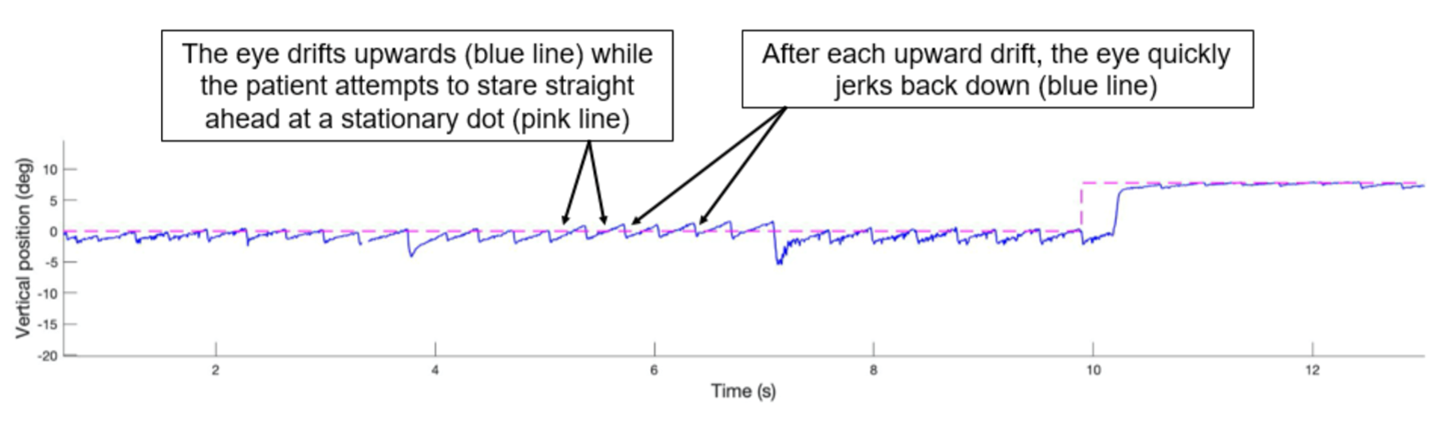
The patient’s initial neurologic exam was normal with the absence of episodes. In a follow-up clinical exam, however, Dr. Guell Paradis noted downbeat nystagmus with subtle past-pointing during finger-chase testing. “The characteristic oculomotor abnormalities with the patient’s age and clinical history were enough to suspect spinocerebellar ataxia type 27B,” Dr. Guell Paradis says.
Ataxia Expertise
Newly identified in 2022, spinocerebellar ataxia type 27B (SCA27B) is a rare, autosomal dominant, late-onset cerebellar ataxia subtype. The underlying cause is an abnormal GAA repeat expansion in the fibroblast growth factor 14 (FGF14) gene, which disrupts signal transmission in cerebellar Purkinje neurons and leads to progressive loss of balance and coordination. Symptoms are standard of cerebellar ataxia and include wide-based gait, poor balance, slurred speech, nystagmus, double vision, vertigo, poor limb coordination, and fatigue.
Establishing a diagnosis of cerebellar ataxia requires clinical and movement disorders expertise, including suspecting the condition from the patient’s history and exam and advanced testing and departmental collaboration to confirm the underlying etiology, given the range of subtypes. “With SCA27B, the size of the cerebellum can be normal or only slightly reduced on MRI, which is why clinical expertise and sophisticated testing is necessary,” says Dr. Guell Paradis.
“As a referral center for ataxia, we see patients with SCA27B at least once a month.”
Xavier Guell Paradis, MD, PhD
As a National Ataxia Foundation Center of Excellence, NYU Langone’s Fresco Institute exemplifies an exceptional level of care and services for patients with ataxia. It’s one of two such designated centers in New York City and the region. “Despite SCA27B being a rare diagnosis, as a referral center for ataxia, we see patients with SCA27B at least once a month,” Dr. Guell Paradis says.
If detected early, medication is available to potentially control symptoms, making timely diagnosis essential. Without treatment, patients may lose their ability to walk. “It’s a missed opportunity,” Dr. Guell Paradis says. “Detecting SCA27B has the potential to transform a patient’s life. We not only provide an explanation for their symptoms but a treatment that is often very effective at improving their condition.”
Diagnosis and Treatment
After suspecting downbeat nystagmus, Dr. Guell Paradis referred the patient to neuro-ophthalmologist Janet C. Rucker, MD, who used video-oculography to detect the abnormal ocular movements. Genetic testing for the FGF14 GAA repeat expansion, along with consultation with specialists in the Division of Neurogenetics—including Nicolas J. Abreu, MD, associate director of the division, and Giulietta M. Riboldi, MD, PhD, director of the Fresco Institute—confirmed the diagnosis.
Dr. Guell Paradis then prescribed dalfampridine. The twice-daily oral medication is FDA-approved to improve walking in patients with multiple sclerosis and has also been shown to improve symptoms in up to 80 percent of patients with SCA27B.
With treatment, the patient’s symptoms significantly improved within one week—a response typical of Dr. Guell Paradis’ patients with SCA27B on dalfampridine. Barring any change in tolerability or efficacy, continued indefinite use of the medication is expected.
“The patient’s balance is better and the pronounced episodes of difficulty walking and imbalance have gone away,” Dr. Guell Paradis says. “He’s happy his life is back to normal, and we are thrilled we detected it in time for him to benefit from the medication.”