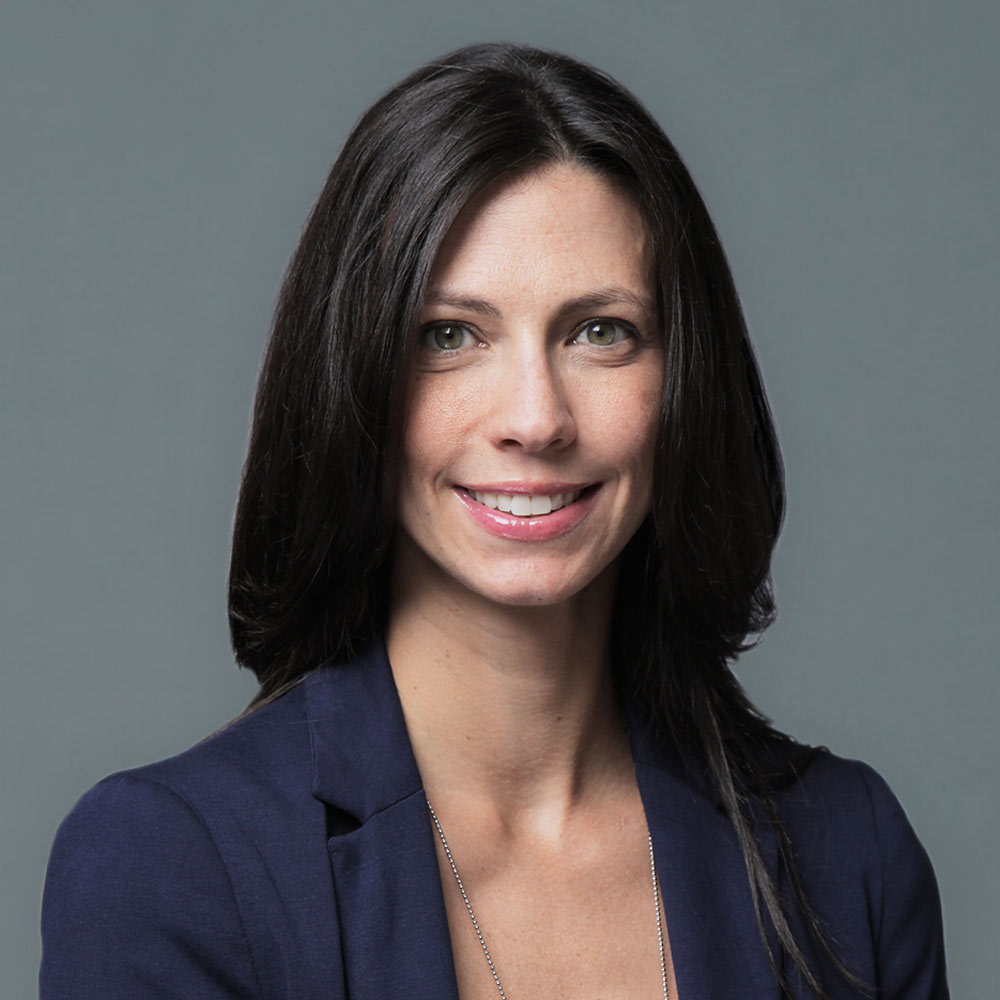

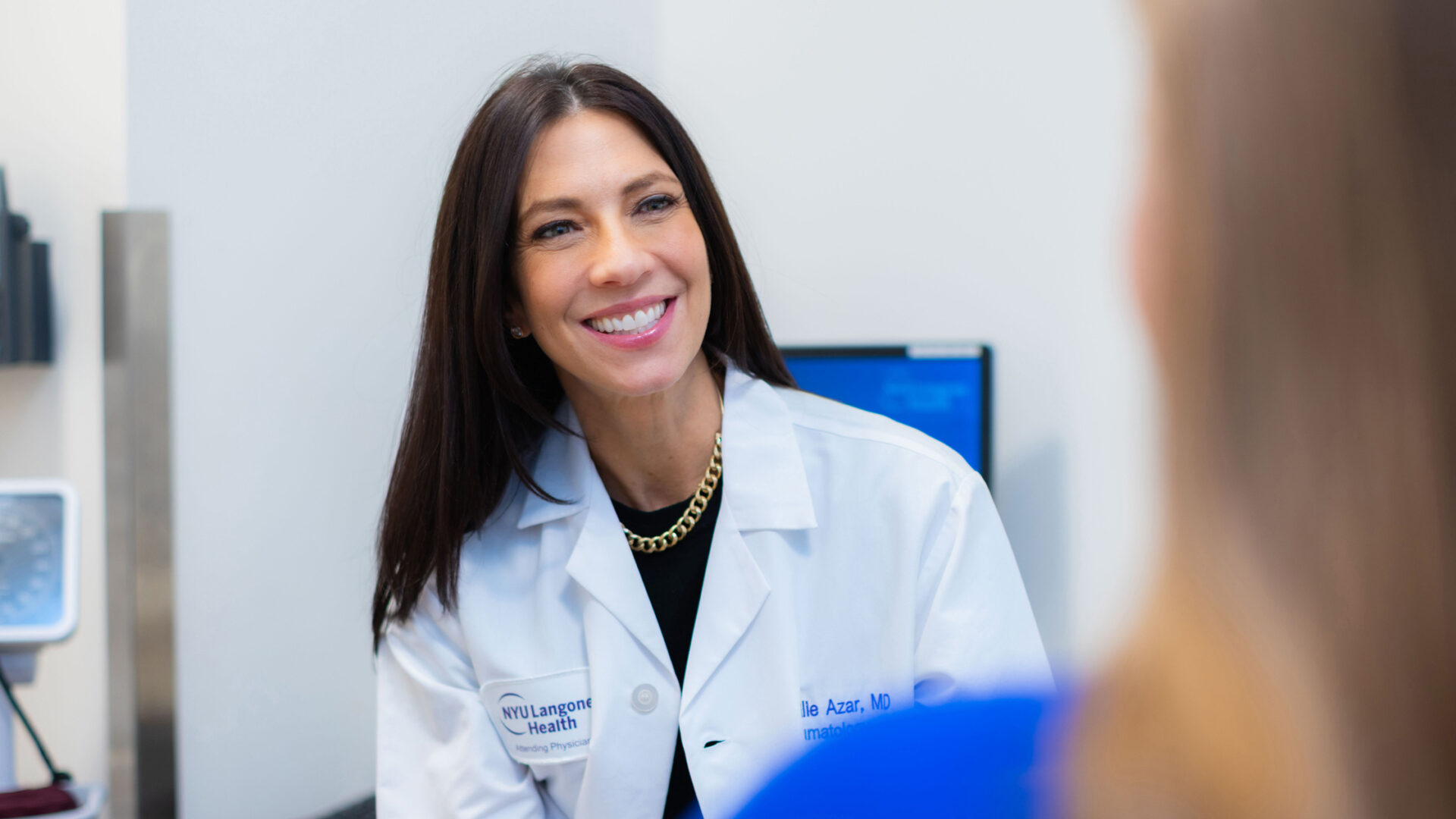
An on‑air medical contributor for NBC News and a rheumatologist at NYU Langone Health, Natalie E. Azar, MD, brings evidence-based medicine to millions of viewers while maintaining a busy clinical practice. Known for her ability to translate complex science into clear, practical guidance, Dr. Azar occupies a rare space at the intersection of patient care, health education, and medical journalism.
Here, she reflects on what drew her to medicine, how media work has shaped her practice, and what it means to guide patients through an era of rapidly evolving medical information.
Physician Focus: Dr. Azar, what drew you to rheumatology, and what continues to inspire you?
Dr. Azar: I knew I’d be a doctor from the time I was five years old; my father was a physician, and I had this drive to understand how the human body worked so I could treat illness and help people.
In medical school, I was unsure whether I wanted to be an internal medicine generalist or a specialist until I had my first exposure to rheumatology during residency. The basic science of rheumatology—and its roots in immunology and inflammation—felt natural to me.
At this point in my career, I’ve seen scores of “bread-and-butter” rheumatology cases: vasculitis, lupus, rheumatoid arthritis. But occasionally, I’ll take a history and realize I need to dig deeper to rule things in or out. For me, it’s fascinating to watch lab results come in and see whether my hunches were correct, helping a patient find their diagnosis. For many patients, uncertainty can be harder than hearing a definitive diagnosis.
As a mom, I also love treating women of childbearing age, who present with autoimmune diseases in greater numbers than other populations. I enjoy helping patients with lupus and other diagnoses navigate pregnancy and experience motherhood.
Physician Focus: What is your approach when translating complex medical information for public consumption? How do you balance accuracy and accessibility?
Dr. Azar: I don’t have formal media training, so from my start with NBC I have approached my segments the way I talk with patients. I gauge their health literacy and adjust explanations accordingly; I think the media audience is somewhere in between a medical professional and someone with no medical background.
“The other thing I learned is to start with the headline: What’s new, why is it important, and what’s the take-home message?”
Natalie E. Azar, MD
I won’t avoid a medical term if I think viewers will hear it and want to understand it—but I’ll define it quickly in a clear, consumable way. The other thing I learned is to start with the headline: What’s new, why is it important, and what’s the take-home message? As an NBC colleague told me early on, “Natalie, you’re not giving a grand rounds talk here.” We have two minutes to convey information that could have huge, practice-changing ramifications for the public.
Physician Focus: Are you finding that patients are more frequently consulting AI before seeing you? How can physicians stay ahead of these changes in how patients absorb medical information?
Dr. Azar: I’m not sure patients are specifically using AI tools just yet, but they’re definitely coming in with information they’ve found online—which is increasingly driven by AI-powered search engines. And I encourage it. I’ve never believed in telling patients not to look things up. I want them to be informed.
But we also need to guide patients in using these tools wisely. It’s easy to fall into confirmation bias—researching symptoms and finding something that fits what you already fear. That’s where our role becomes even more important: to help patients interpret what they’re reading, weigh it against evidence, and apply it thoughtfully to their unique situation.
Physician Focus: As an on-air clinician, you bring lessons from medicine to the public. Do you find you also take any lessons from your segments back into the exam room?
Dr. Azar: Absolutely—and that was a surprise to me at first. Early on, I worried that preparing for media segments might take time away from reviewing labs or reading specialty journals. But I quickly realized the opposite is true. Covering health news helps me stay current on the latest research and practice-changing updates in internal medicine—whether it’s about cardiac risk, aspirin use, or hormone therapy.
“The two roles complement each other in a way I never expected.”
As internists and rheumatologists, we touch so many aspects of general medicine, and the topics that make the news often overlap with what patients are asking about. Staying informed makes me a better communicator—and a better doctor. I’m constantly learning and reading. While no one has time to keep up with every journal every week, I’m grateful that my work in media helps me stay engaged with what’s most relevant and timely for my patients. The two roles complement each other in a way I never expected.